

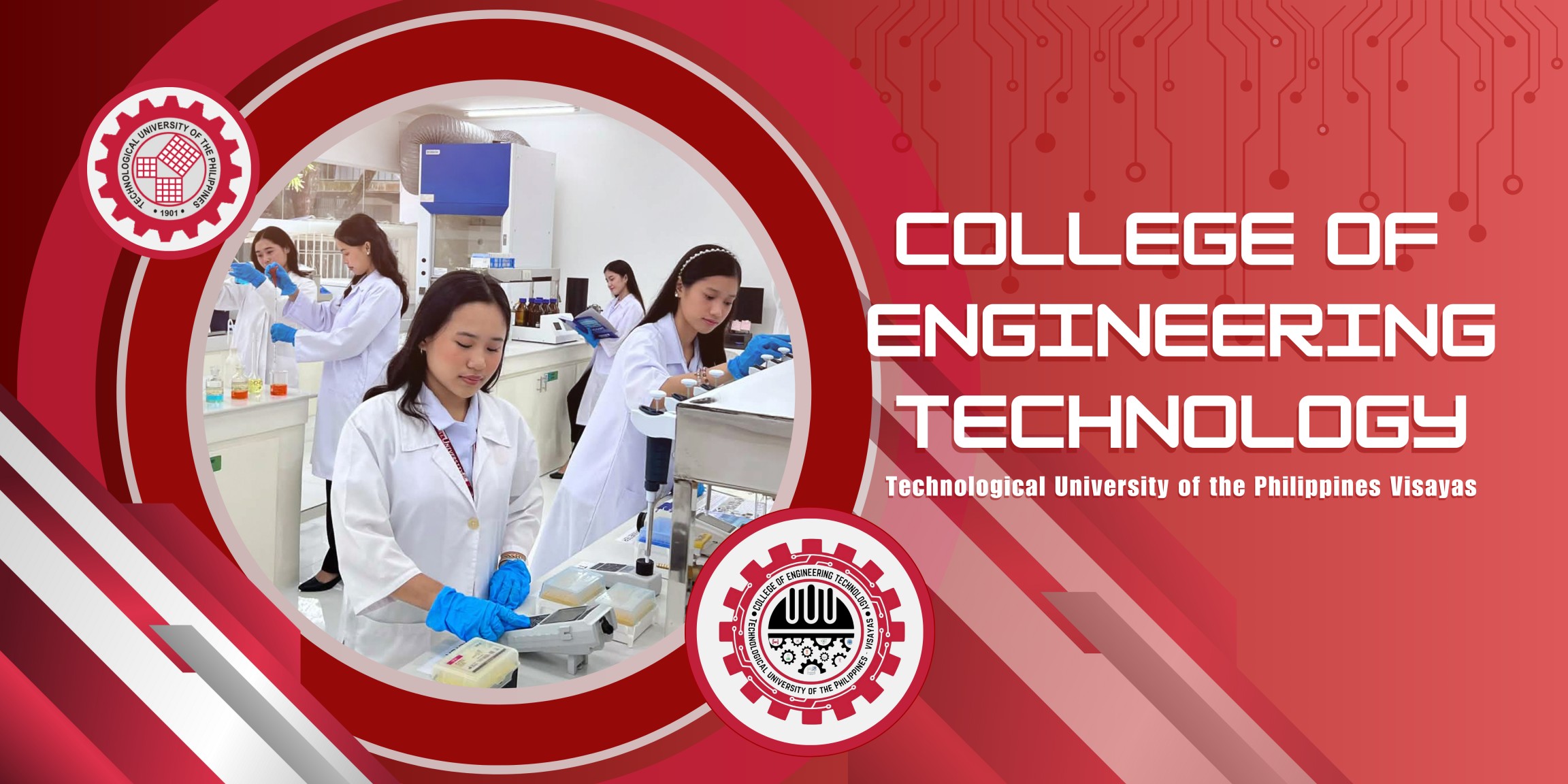
COLLEGE OF ENGINEERING TECHNOLOGY
The Technological University of the Philippines Visayas (TUP-Visayas) traces its roots to a national initiative in technical and technological education that began in the late 20th century. Established in 1977 as the Visayas Technician Institute (VTI), the institution was created as one of three prototype technician institutes funded under a Philippine government project to strengthen technical manpower development in key regions of the country.
In 1978, following the conversion of the Philippine College of Arts and Trades into the Technological University of the Philippines (TUP) by Presidential Decree No. 1518, the Visayas Technician Institute was placed under the administration of the TUP system as part of a national effort to centralize and elevate polytechnic education.
By 1985, the TUP Board of Regents officially renamed the Visayas Technician Institute as the Technological University of the Philippines Visayas (TUP-Visayas), marking its full evolution into a satellite campus of the national university system.
As TUP-Visayas matured, its College of Engineering Technology became a cornerstone of its academic offerings—designed to provide industry-relevant engineering and technology education for students from Western Visayas and beyond. Grounded in TUP’s long tradition of technical excellence, the college embraces innovative teaching, practical laboratory work, and strong linkages with industry partners to prepare graduates for the demands of a rapidly evolving technological landscape.
Over the years, TUP-Visayas has expanded in both capability and reputation. Its graduates have consistently performed well in professional licensure and certification examinations, reflecting the institution’s dedication to quality education and professional preparedness.
Today, TUP Visayas College of Engineering Technology stands as a leading provider of engineering and technological education in the Visayas region—producing graduates who are equipped with the technical knowledge, problem-solving skills, and ethical grounding to contribute meaningfully to industry, government, and community development.